
Selecting the right pump can determine the success or failure of your fluid handling operation. A mismatch between pump type and application leads to premature wear, increased maintenance costs, and costly downtime. For operations managers, maintenance engineers, and procurement specialists, proper selection between pump types is critical to making informed purchasing decisions.
Both gear pumps and lobe pumps are positive-displacement pumps. They move a fixed volume of fluid with each rotation, providing consistent flow rates regardless of pressure changes. Other positive displacement pump types include air operated diaphragm pumps, piston pumps, peristaltic pumps, and vane pumps. However, gear pumps and lobe pumps remain among the most widely specified for industrial fluid transfer due to their reliability and versatility across a range of applications.
This guide explains how each pump type works, where it excels, and how to select the right solution for your specific industrial requirements.
How Gear Pumps Work
A gear pump uses interlocking gears to move fluid from the inlet side to the discharge side. As the gears rotate, they create cavities that draw fluid into the pump casing. The fluid becomes trapped between the gear teeth and the housing wall, then travels around to the outlet. From there, fluid exits through the discharge line to the downstream process.
This simple yet effective mechanism makes gear pumps a popular choice for applications requiring consistent flow and accurate metering. Their compact design and ability to generate high pressure have made them a staple across hydraulic systems, fuel transfer operations, and industrial lubrication circuits.
Types of Gear Pumps
Gear pumps are available in two main types, each suited to different operational demands.
External Gear Pumps
External gear pumps feature two identical gears that mesh together externally. One gear acts as the drive gear while the other serves as the idler. As both gears rotate in opposite directions, fluid fills the spaces between the gear teeth and the pump casing. The tight tolerances between the gears and housing create strong suction capabilities and allow for high-pressure output.
External gear pumps handle both low- and medium-viscosity fluids with precision. They are commonly used in hydraulic systems, chemical processing, and fuel transfer applications where pressure consistency matters.
Internal Gear Pumps
Internal gear pumps contain a smaller external gear positioned inside a larger internal rotor. A crescent-shaped partition separates the suction and discharge zones. Fluid enters the pump, fills the cavities formed between the two gears, and moves toward the discharge side as the gears rotate.
This design handles higher viscosity fluids more effectively than external gear pumps. Internal gear pumps operate at lower speeds, producing smooth flow with minimal pulsation. They are suitable for applications involving heavy oils, resins, and adhesives.
Strengths of Gear Pumps
Gear pumps offer several operational advantages that make them a reliable choice for demanding applications:
- High-pressure capability: Gear pumps can operate at pressures exceeding 200 bar, making them suitable for hydraulic power units and high-pressure cleaning systems.
- Accurate metering: The fixed displacement design delivers predictable flow rates proportional to rotational speed.
- Compact footprint: Their simple construction allows for installation in space-constrained environments.
- Self-priming ability: Gear pumps can draw fluid without requiring external priming equipment.
- Cost-effective: Lower initial purchase price compared to other positive displacement pump types.
- High efficiency: Volumetric efficiency up to 95% reduces power consumption during operation.
Limitations of Gear Pumps
While gear pumps excel in many scenarios, certain conditions reduce their effectiveness:
- Wear from abrasive fluids: Tight clearances between gear teeth can accelerate wear and reduce pump life.
- Limited solids handling: Gear pumps struggle with fluids containing suspended particles or large solids.
- Higher shear forces: The meshing action generates shear that can damage shear-sensitive fluids like emulsions or food products.
- Noise generation: Gear contact and high-speed operation can produce significant noise and vibration.
- Not suitable for highly viscous fluids: Performance drops when handling extremely thick materials due to increased resistance.
How Lobe Pumps Work
A rotary lobe pump moves fluid using two or more lobed rotors that rotate within a pump casing. Unlike gear pumps, the lobes never make contact with each other. External timing gears synchronise their movement, creating chambers that transport fluid from the inlet to the discharge side.
As the lobes rotate, they separate on the suction side, creating an expanding cavity. Fluid enters this space, travels around the pump housing between the lobes and casing, then exits as the lobes come together on the discharge side. This non-contact design delivers gentle handling that protects product integrity. Note that helical rotor designs, such as progressive cavity pumps, operate differently, using a single helical rotor within a stator for high-viscosity applications.
Key Characteristics of Lobe Pumps
The rotary lobe pump design offers distinct operational features:
Non-Contact Operation
Because the lobes do not touch, internal wear remains minimal. External timing gears control rotor synchronisation, eliminating metal-to-metal contact within the pumping chamber. This extends service life and reduces maintenance frequency.
Large Pumping Cavities
The generous space between the lobes accommodates high-viscosity fluids and suspensions containing solids. Particles pass through without becoming trapped or damaging internal components.
Reversible Flow Direction
Lobe pumps can operate in either direction by simply reversing motor rotation. This capability proves valuable for line clearing, product recovery, and clean-in-place procedures.
Strengths of Lobe Pumps
Rotary lobe pumps deliver advantages that make them indispensable in specific industries:
- Gentle product handling: Low-shear operation preserves the integrity of shear-sensitive fluids such as creams, sauces, and pharmaceutical compounds.
- Excellent solids handling: Large cavities pass solids, slurries, and particulate matter without clogging.
- Wide range of viscosities: From thin liquids to thick pastes, lobe pumps maintain consistent performance.
- Hygienic design: Smooth surfaces and ease of disassembly support CIP (clean-in-place) and SIP (sterilise-in-place) procedures.
- Low pulsation: Smooth flow characteristics reduce stress on downstream equipment and piping.
- Easier maintenance: Non-contact design means fewer wear parts require replacement.
- Run dry capability: Many lobe pump designs can operate dry for short periods without damage.
Limitations of Lobe Pumps
Despite their versatility, lobe pumps have operational constraints:
- Lower pressure capability: Maximum discharge pressures are typically lower than those achievable with gear pumps.
- Higher initial cost: Complex design and precision manufacturing increase purchase price.
- Reduced efficiency with thin fluids: Low-viscosity fluids may experience slip between the lobes and the casing.
- Larger physical size: For equivalent flow rates, lobe pumps often require more installation space than gear pumps.
- External timing gears require maintenance: While internal wear is minimal, the external gear mechanism needs periodic inspection and lubrication.
Side-by-Side Comparison: Gear Pump vs Lobe Pump
Understanding the practical differences between these pump types helps narrow down the right choice for your application. The following table summarises key performance parameters:
Parameter | Gear Pump | Lobe Pump |
Maximum Pressure | Up to 250+ bar | Up to 30 bar (typical) |
Viscosity Range | Low to medium (up to ~100,000 cP) | Medium to very high (up to 1,000,000 cP) |
Solids Handling | Poor – risk of wear and damage | Excellent – passes large particles |
Shear Sensitivity | Higher shear forces | Low shear – preserves product integrity |
Flow Characteristics | Some pulsation | Smooth, low pulsation |
Self-Priming | Yes | Yes |
Run Dry Capability | Limited – risk of damage | Often capable for short periods |
Maintenance Frequency | Higher due to gear wear | Lower due to non-contact design |
Cleaning Ease | Moderate | Excellent – CIP/SIP compatible |
Initial Cost | Lower | Higher |
Noise Level | Higher | Lower |
Typical Applications | Hydraulics, fuel transfer, and lubrication | Food processing, pharmaceuticals, wastewater |
How Various Industries Use Gear Pumps and Lobe Pumps
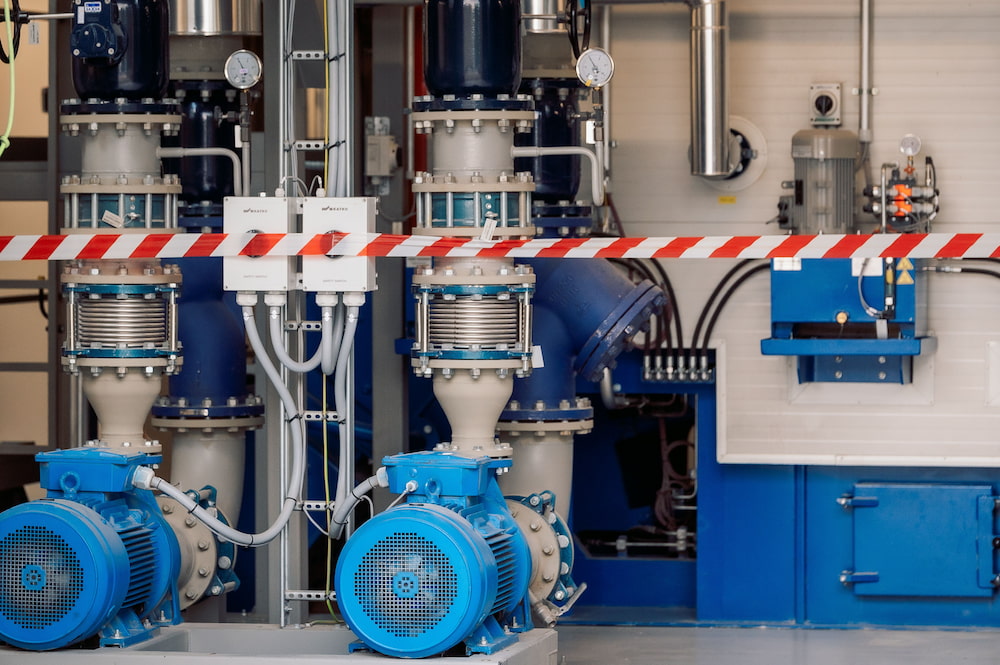
Both gear pumps and lobe pumps serve critical roles across Australian industries. Their distinct characteristics make each type better suited to specific operational environments. Understanding where each pump excels helps procurement specialists and process engineers match equipment to application requirements. These pumps are commonly used across sectors ranging from food production to heavy industry.
Food and Beverage Processing
The food processing industry demands pumps that maintain product quality while meeting strict hygiene standards. Rotary lobe pumps dominate this sector due to their gentle handling of shear-sensitive fluids and compatibility with CIP procedures.
Lobe pumps transfer viscous products like sauces, jams, dairy creams, and chocolate without breaking down their structure. Their ability to handle particulates makes them suitable for soups containing vegetables, fruit preparations with pulp, and meat mixtures. These pumps can operate for long periods without degrading product quality.
Gear pumps are used sparingly in food and beverage applications. They may handle thin, low-viscosity liquids like oils and syrups where shear sensitivity is not a concern.
Pharmaceutical Industry
The pharmaceutical industry requires pumps that preserve compound integrity and meet stringent sanitary requirements. Lobe pumps provide the low shear, hygienic operation these applications demand.
Products like ointments, lotions, gels, and suspensions benefit from the gentle displacement action. The smooth internal surfaces prevent product contamination and allow thorough cleaning between batches. Pharmaceutical manufacturers value the ability to run these pumps for long periods during continuous production cycles.
Internal gear pumps may handle certain pharmaceutical solvents and thin liquids where viscosity remains low, and shear is acceptable.
Chemical Processing
Chemical plants require pumps capable of handling a broad spectrum of fluids, from aggressive acids to thick polymers. Pump selection depends heavily on fluid properties and process conditions.
Gear pumps excel in chemical applications involving:
- Fuel oils and lubricants
- Solvents and alcohols
- Resins and polymers at controlled temperatures
- Chemical additives requiring accurate metering
Lobe pumps handle:
- Slurries and suspensions with solid content
- Viscous compounds like adhesives and paints
- Shear-sensitive emulsions
Mining and Mineral Processing
Mining operations present some of the harshest pumping conditions. Fluids often contain abrasive particles, high solids content, and extreme viscosities.
Rotary lobe pumps handle mine tailings, slurries, and sludge with minimal internal wear. Their large cavities pass rock fragments and mineral particles without clogging. The non-contact design reduces maintenance frequency at remote sites, where downtime is costly.
Gear pumps are less common in mining due to the abrasive nature of most fluids. However, they may service hydraulic systems and lubrication circuits where filtered fluids prevent particle damage.
Water and Wastewater Treatment
Water treatment facilities use both pump types depending on the specific process stage.
Lobe pumps handle sludge transfer, thickened biosolids, and chemical slurries throughout the treatment process. Their ability to pump fluids with high suspended solids content makes them valuable for moving waste streams.
Gear pumps provide accurate metering for chemical dosing applications. They inject precise volumes of treatment chemicals, such as coagulants, flocculants, and disinfectants, into water streams. Their high efficiency makes them cost-effective for continuous dosing operations.
Automotive and Manufacturing
Manufacturing facilities rely on pumps for lubrication systems, coolant circulation, and material transfer.
Gear pumps dominate automotive applications, including:
- Fuel delivery systems
- Engine oil circulation
- Transmission fluid transfer
- Hydraulic power units
Their high-pressure capability and compact size suit the confined spaces and demanding conditions found in manufacturing environments.
Lobe pumps appear in specialised manufacturing applications involving adhesives, coatings, and paste materials that require gentle handling.
How to Choose the Right Pump for Your Application
Selecting between a gear pump and a lobe pump requires a systematic evaluation of your operational requirements. Proper selection prevents costly mismatches that lead to premature failure and excessive maintenance. Consider the following factors when making your decision:
- Fluid Viscosity: Low viscosity fluids (water-like to light oil consistency) typically suit gear pumps. High-viscosity fluids, such as heavy oils, pastes, and thick creams, perform better with lobe pumps.
- Solids Content: If your fluid contains suspended particles, fibres, or chunks, choose a lobe pump. The large pumping cavities handle solids without wear or blockage. Gear pumps require clean, filtered fluids to prevent damage.
- Shear Sensitivity: Products that break down under mechanical stress need the gentle action of a lobe pump. Emulsions, creams, textured food products, and biological compounds fall into this category. Gear pumps work well with stable, shear-resistant fluids.
- Pressure Requirements: High-pressure applications above 30 bar favour gear pumps. Their robust construction and tight tolerances generate the pressure needed for hydraulic systems and high-pressure transfer.
- Hygiene Standards: Applications requiring frequent cleaning, sterilisation, or compliance with food/pharmaceutical regulations benefit from lobe pump designs. Their smooth surfaces and easy disassembly support sanitary operation.
- Budget Considerations: For straightforward applications with clean, stable fluids, gear pumps offer a cost-effective solution. Lobe pumps justify their higher price when product quality, reduced maintenance, or hygiene requirements demand their capabilities.
- Maintenance Access: Consider your facility’s maintenance capabilities. Lobe pumps typically require less frequent servicing but may need specialised knowledge for repairs. Gear pumps have simpler internals but wear parts need replacement more often.
Expert Gear Pump and Lobe Pump Solutions from Hunter Pumps
With over 25 years of experience, Hunter Pumps has established itself as Australia’s trusted supplier of industrial pumping solutions. Our team understands that pump selection extends beyond matching specifications on paper. Real-world performance depends on proper sizing, installation, and ongoing support.
We supply gear pumps and lobe pumps from the world’s most trusted manufacturers. Our inventory includes pumps suited to food processing, chemical handling, mining operations, and general industrial applications. When you need spare parts for emergency repairs, we maintain stock to minimise your downtime.
Beyond product supply, our professional pump services cover the complete equipment lifecycle. Our trained technicians provide on-site servicing, preventative maintenance programs, and pump repairs. We help you develop maintenance schedules that extend equipment life and prevent unexpected failures.